Source High Power Stadium Horn Speaker for Schools, Arenas, Parks
Compare 30 high power stadium horn speaker options from verified Chinese manufacturers. Buyers can evaluate specifications like sensitivity, frequency response, and power ratings for commercial and outdoor applications.
Key considerations
Products List
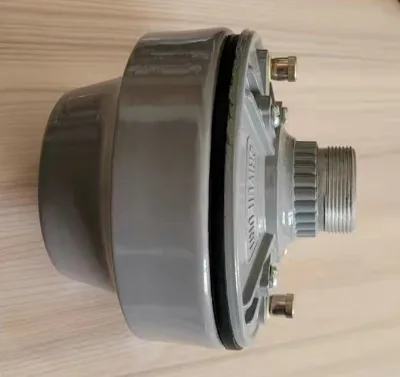


$100.00 - $400.00
Moq: 1


Comprehensive Sourcing Guide
High Power Stadium Horn Speaker Sourcing Guide
Sourcing high-power stadium horn speakers requires a disciplined approach that balances acoustic performance with environmental durability. These components are critical for public address systems in large venues, where clarity and coverage must withstand significant ambient noise. Buyers must navigate a market characterized by diverse configurations, ranging from passive coaxial units to specialized long-distance horns. The following guide outlines the essential verification steps, technical parameters, and commercial considerations necessary for successful procurement.
The procurement landscape for these speakers is defined by specific technical constraints and manufacturing origins. Most available units originate from Guangdong, China, with Guangzhou serving as a key production hub. This regional concentration offers access to established supply chains but necessitates rigorous quality control to ensure consistency. Buyers should focus on verifying the exact model numbers, such as the MQ-12CP or MH-12/64, to align specifications with their venue’s acoustic requirements.
Product Scope and Observed Listing Signals
The current market for high-power stadium horn speakers includes a variety of form factors, primarily categorized by their driver configuration and dispersion characteristics. Listings indicate the presence of single 12-inch two-way long-distance all-weather horns, which are designed for maximum throw and clarity over large areas. Additionally, coaxial waterproof two-way loudspeakers are available, offering a different acoustic profile suitable for varied installation scenarios. Understanding these distinctions is vital for selecting the right unit for specific stadium zones, such as main stands versus concourses.
Material composition and physical dimensions vary significantly across different models, impacting both installation logistics and acoustic performance. Some units feature wood enclosures, which may offer specific resonant properties, while others utilize metal cabinets for enhanced durability and weather resistance. Dimensions can range from compact units measuring approximately 410x407x443mm to larger assemblies reaching 698x610x778mm. Buyers must account for these physical differences when planning mounting structures and ensuring adequate clearance for heat dissipation and maintenance access.
Technical Specifications to Verify
Acoustic performance metrics, particularly sensitivity and sound pressure level (SPL), are primary indicators of a horn speaker’s efficiency and maximum output. High-sensitivity units, such as those rated at 107dB (1W/1m), are crucial for achieving high volume levels with lower amplifier power, reducing system costs and heat generation. Peak SPL ratings can reach up to 138dB, ensuring the system can handle the dynamic range required for stadium announcements and event audio. Buyers must verify these figures against the specific noise floor of their venue to ensure intelligibility.
Frequency response and impedance matching are equally critical for system integration and tonal accuracy. Typical frequency ranges extend from 55Hz to 19kHz, with some models offering a narrower band of 89Hz to 19kHz for optimized mid-high clarity. Nominal impedance is commonly 8 Ohms, which simplifies amplifier matching and parallel wiring strategies. Additionally, dispersion patterns, such as 60° horizontal by 40° vertical rotatable coverage, allow for precise aiming to minimize reflections and maximize audience coverage. Buyers should confirm these parameters to ensure seamless integration with existing audio processing equipment.
Compliance and Safety Documentation
Certification requirements are non-negotiable for public address systems installed in commercial and stadium environments. Products must typically carry CE, RoHS, and CCC certifications, indicating compliance with European environmental standards, restriction of hazardous substances, and Chinese compulsory product certification. These documents are essential for legal installation and insurance purposes, particularly in international projects where local regulations may mandate specific safety standards. Buyers must request valid certificates for each batch to ensure ongoing compliance.
Electrical safety and operational modes also require careful documentation review. Input voltage specifications, such as 100V, must align with the local power infrastructure to prevent equipment damage. The operation mode, whether wire-based or remote-controlled, impacts the system’s flexibility and user interface design. Furthermore, the passive nature of many horn speakers means they rely on external amplifiers, requiring verification of amplifier compatibility and system gain structure. Buyers should ensure all electrical documentation is complete and matches the physical labeling on the units.
Cost Drivers and Commercial Terms
Pricing for high-power stadium horn speakers is influenced by material quality, acoustic performance, and customization options. The observed price range spans from $1 to over $3,000, reflecting the diversity from basic components to fully integrated, high-performance systems. Factors such as wood versus metal construction, waterproof ratings, and specific dispersion patterns contribute to cost variations. Buyers should evaluate the total cost of ownership, including amplifier requirements and installation complexity, rather than focusing solely on the unit price.
Minimum order quantities (MOQ) and customization capabilities are key commercial considerations for large-scale stadium projects. MOQs can range from 1 unit to 5,000 pieces, allowing for flexibility in pilot installations or full venue rollouts. Many suppliers offer OEM branding and logo acceptance, enabling venue operators to maintain consistent branding across their audio infrastructure. Buyers should negotiate terms that allow for sample testing before committing to large orders, ensuring that the acoustic performance meets their specific venue requirements.
Supplier Qualification and Quality Control
Supplier verification is paramount when sourcing audio equipment for critical infrastructure. Buyers should prioritize manufacturers with a proven track record in the Guangdong region, specifically Guangzhou, known for its robust electronics manufacturing ecosystem. Verification of production capabilities, including quality control processes for acoustic testing and environmental sealing, is essential. Suppliers offering customization services should demonstrate the ability to maintain consistent quality across different production runs.
Quality control protocols must include rigorous testing of key performance indicators. Buyers should request test reports for THD (Total Harmonic Distortion), which should be below 0.005% for high-fidelity applications, although many stadium horns are not classified as Hi-Fi. Sensitivity and SPL tests should be conducted under standardized conditions to ensure accuracy. Additionally, physical inspections for connector integrity, such as Neutrik NL4MP sockets, and structural durability are necessary to prevent field failures. Establishing clear acceptance criteria before shipment is crucial for mitigating risk.
Long-Term Procurement Checks
Sustainability and after-sales support are critical factors for the long-term viability of stadium audio systems. Buyers should inquire about the availability of spare parts, such as drivers and crossover components, to minimize downtime in case of failure. The use of durable materials like metal enclosures and waterproof designs contributes to the longevity of the equipment in outdoor or high-traffic environments. Suppliers that offer comprehensive technical support and warranty terms provide added value and reduce operational risks.
Future-proofing the procurement strategy involves considering system scalability and compatibility with evolving audio technologies. While current models may not include FM reception or HDMI inputs, the system architecture should allow for integration with modern digital signal processors and networked audio solutions. Buyers should evaluate the supplier’s ability to provide firmware updates or hardware revisions that align with industry trends. Establishing a long-term partnership with a reliable supplier ensures consistent supply and support for future venue upgrades or expansions.
FAQs
What certifications do these high power stadium horn speakers have?
These speakers hold CE, RoHS, and CCC certifications for safety and compliance. This ensures they meet international standards for electrical equipment used in commercial and home audio applications.
How is the sound output measured for these horn speakers?
The sound pressure level reaches up to 138dB peak with a sensitivity of 107dB at 1W/1m. This high output supports long-distance coverage suitable for stadium and outdoor commercial environments.
Can I customize the logo on these high power speakers?
Yes, logo customization is available for these products. Buyers can request specific branding on the speaker units while maintaining the classic style and waterproof coaxial system design.
What is the minimum order quantity for these speakers?
The minimum order quantity is 500 pieces for this product line. This bulk requirement applies to the standard packaging and customization options available from the Guangdong, China origin.
Which materials are used to construct these horn speakers?
The speakers are constructed using wood and metal materials for durability. This combination supports the all-weather design required for long-distance sound projection in various commercial and outdoor settings.
How do these speakers handle power rating and impedance?
They feature a 300W AES power rating with an 8-ohm nominal impedance. This configuration ensures stable performance when connected to compatible amplifiers for high-power audio applications.